




Why Southeast Steel Fabricators Are Choosing Regional Detailers Over National Shops
Why Southeast Steel Fabricators Are Choosing Regional Detailers Over National Shops
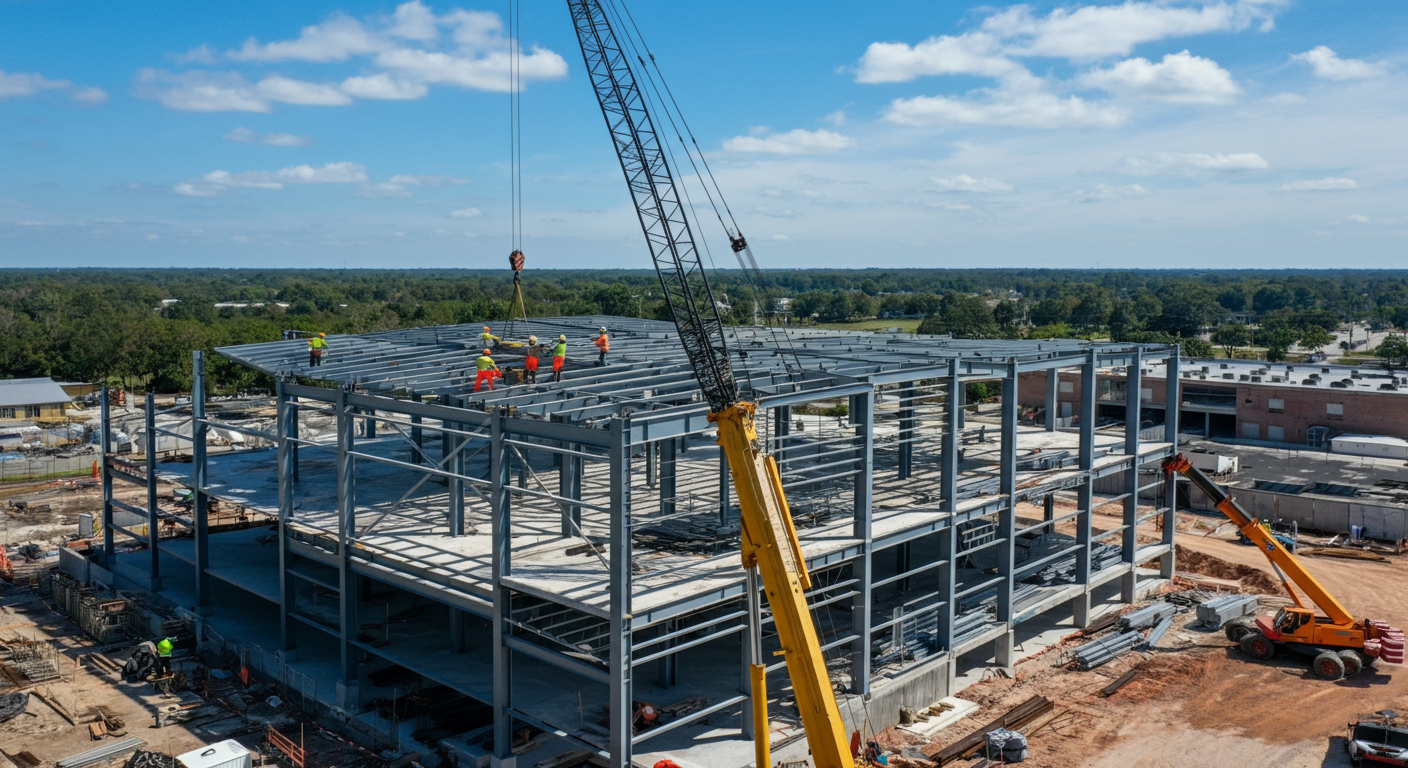
A national steel detailing firm with 200 detailers and offices in four states sounds like a safer bet than a regional shop. More capacity, more resources, more process. What it often means in practice is that your 180-piece light industrial package in Greensboro is sitting in a queue behind a 2,000-piece hospital project in Dallas, your assigned contact is three time zones away, and nobody on the production team has ever pulled a permit in North Carolina. National scale solves for capacity. It doesn't solve for accountability, code familiarity, or the kind of project-level attention that mid-size fabricators actually need. That's why a growing number of Southeast fabricators — shops running 20 to 150 employees — are deliberately moving their detailing work to regional firms. Not out of sentiment, but because it's producing better outcomes on the projects that matter to them most.
The National Shop Pitch — and Why It Breaks Down for Mid-Size Fabricators
The national firm pitch is consistent: deep bench, proven process, ISO-certified workflow, software standardization across all offices. For a fabricator running a 1,500-piece hospital or a multi-building campus project with a year-long schedule, that capacity story holds water.
For a 40-person shop detailing a three-story office building in Raleigh or a distribution center in Charlotte, it falls apart fast. Your project isn't driving revenue at a national firm. It's filling queue gaps. When their anchor clients push scope or accelerate schedules, your submittal window compresses. Your RFIs sit. Your revision cycles stretch.
National volume shops are structured around throughput. Their internal triage systems route effort toward billable hours on high-value accounts. A 200-piece package is a line item, not a relationship. That's not a criticism — it's just how the economics of a national firm work. The problem is that mid-size Southeast fabricators often don't understand this dynamic until they're two weeks behind on their first submittal and chasing a response on an IFC package they submitted ten days ago.
What Regional Means in Practice
Regional detailing isn't a geography preference. It's an operational model with concrete advantages.
Timezone alignment is the most immediate. An RFI that comes off the fabrication floor at 3:30 PM on a Friday in Durham needs a response before the weekend, not first thing Monday from a West Coast office. A regional detailer in the same timezone takes that call, checks the model, and sends a marked-up detail before close of business. That's not a minor convenience — it's schedule protection.
Code familiarity runs deeper than most fabricators realize. North Carolina operates on IBC 2018 with state amendments. Local jurisdictions layer on top of that. The seismic design categories across the state shift significantly between the piedmont and the coast. A detailer who has worked consistently in the Southeast knows where the state-specific wrinkles are. That knowledge comes from working projects under the engineers and inspectors who enforce it, not from reading the code cold.
EOR relationships matter on complex projects. When a connection design question escalates to the Engineer of Record, a regional detailer who has a working history with that firm — or with the structural engineering community in that market — moves faster and with more credibility than an anonymous production seat at a national shop.
Coordination meeting access is another practical difference. On a tight commercial project, being able to put a senior detailer in the room with the EOR, the GC, and the fabricator's project manager — in person, same day — can resolve in two hours what a distributed team would spend two weeks emailing about.
The Southeast Project Profile
Southeast commercial and light industrial construction has characteristics that reward regional expertise. The project mix skews toward mid-rise commercial, healthcare, distribution, education, and light manufacturing — structures in the 50- to 600-piece range where the detailing scope is substantial but the schedule is aggressive.
These projects move fast. Permit-to-steel in 90 days is not unusual on a regional commercial project. Owners push GCs, GCs push fabricators, fabricators push detailers. A firm that understands the regional project velocity — and has built its workflow to match it — produces IFC packages and approval submittals on timelines that national shops, working across time zones with internal approval queues, consistently miss.
There's also a material familiarity factor. Regional fabricators have established supplier relationships and standard material specs that reflect regional availability. A detailer who understands that HSS wall thickness availability from Southeast service centers differs from national catalog assumptions catches those conflicts in the model, not on the shop floor.
Relationship Continuity and What It's Worth
Large national firms rotate staff. Your project gets assigned to whoever has capacity at intake. Halfway through the detailing cycle, that person moves to another account, and your next revision set comes from someone who wasn't on the project when the connection logic was established.
This isn't hypothetical. Fabricators who have worked with national shops describe it consistently: the revision quality degrades mid-project because institutional knowledge walks out the door. The replacement detailer is working from markups and emails, not from the same problem-solving context that produced the original model.
A regional firm keeps the same contact on your project from kickoff to final as-builts. That person knows why the W16x40 was upsized in grid B, why the HSS brace connection was revised in the second submittal, and what the EOR's preferences are on weld access hole detailing. That continuity shows up in revision quality, in RFI response accuracy, and in the ability to catch downstream conflicts before they become shop floor problems.
Where National Scale Fails Mid-Size Fabricators: Specific Failure Modes
The failure modes are predictable once you know what to look for.
RFI response lag. A national shop's internal RFI routing adds layers between the question and the person who can answer it. A detailer who knows the model answers immediately. A production manager who has to escalate internally takes days.
Submittal queue backlog. National shops queue submittals by client priority, not by your schedule. If you're not a top-tier account, your approval package waits behind clients who are.
State-specific amendment gaps. A detailer working out of a central production hub doesn't have day-to-day exposure to North Carolina's specific amendments to IBC, ASCE 7 wind speed maps, or local jurisdiction quirks. These gaps show up as comments from the EOR or building department — revision cycles that a regionally experienced detailer would have avoided at the model stage.
Fabrication floor misses. Detailing optimized for submittal approval rather than shop efficiency creates rework on the fabrication floor. A detailer who understands your shop's equipment, your preferred connection standards, and your erection sequence will detail for manufacturability — not just for code compliance.
The Regional Peer Landscape
There are strong regional detailing firms operating in the Southeast tier. Tinker has deep roots in Louisiana. T&S carries significant Texas market experience. Southeastern Steel has an established presence in Alabama. Steel Detailers Inc. serves the Florida market. These are competent firms with real project histories.
NRSteel is the NC-anchored option in this peer group — built around the same regional accountability model, focused exclusively on North Carolina and Southeast commercial and institutional work. If your projects run through the Carolinas, Virginia, Georgia, or Tennessee, the code familiarity, EOR relationships, and timezone alignment that define regional value are strongest with a firm whose entire operational base is in this market.
What to Ask Any Detailer About Their Regional Project History
Before you place a project with any detailing firm, ask direct questions:
- What North Carolina projects have you detailed in the last 24 months, and who was the EOR?
- What state code edition are you working under on current NC projects?
- Who is the named contact on my project, and are they the person who will actually run the model?
- What's your standard RFI response window, and how is that managed when my contact is unavailable?
- Have you detailed for fabricators running similar shop profiles to ours — volume, equipment, connection standards?
The answers tell you immediately whether you're talking to someone with genuine regional experience or a firm that will assign your project to an available seat in their national production queue.
NRSteel works exclusively with fabricators on structural commercial and institutional projects across North Carolina and the Southeast. Same timezone, direct cell access, named contact from kickoff to final as-builts. If you're evaluating detailing partners for your next project or want to compare approaches on a current package, get in touch with NRSteel for a scope review.