




The Southeast Steel Construction Market in 2026: Trends Fabricators Need to Watch
The Southeast Steel Construction Market in 2026: Trends Fabricators Need to Watch
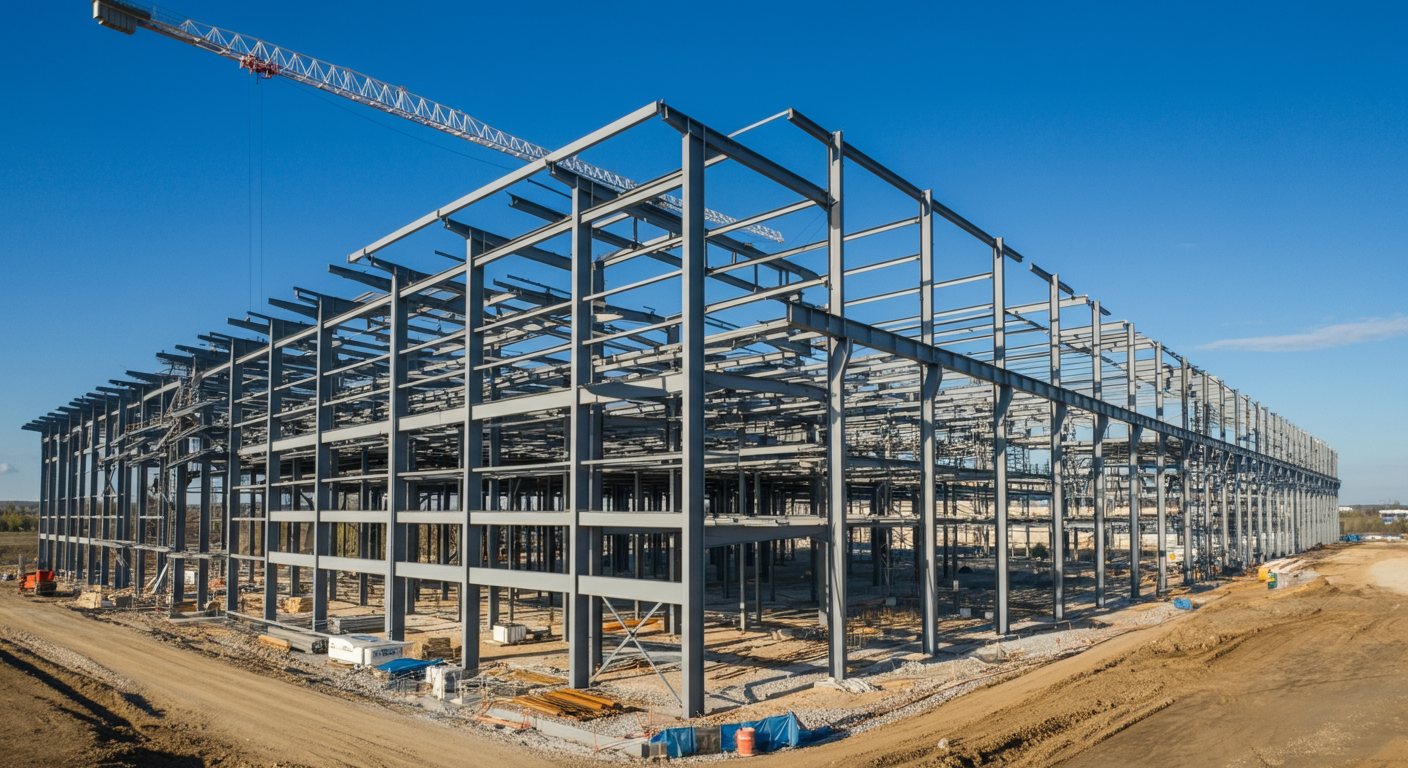
The Southeast's construction market in 2026 doesn't look like it did in 2020, or even 2022. Manufacturing reshoring — driven by the CHIPS Act, IRA incentives, and EV supply chain buildout — has landed billions of dollars of industrial construction across the Carolinas, Georgia, and Tennessee. Data center development along the I-85 corridor and into the Research Triangle is accelerating faster than the regional labor market can absorb. Healthcare systems that deferred capital programs during the pandemic are now executing them simultaneously, stacking complex institutional projects into an already constrained regional construction pipeline. For steel fabricators running shops in the Southeast, this is a busy market. It's also a demanding one — the projects are larger, the schedules are tighter, and the structural packages are more complex than the region's fabricators have typically seen in a single cycle. Your detailing partner either understands that context or they don't. Here's what's driving the market and what it means for your shop.
Market Snapshot: Southeast Steel Construction in 2026
The structural steel demand picture across the Southeast has shifted materially in the last 24 months. The manufacturing reshoring wave — semiconductor fabs, EV battery gigaplants, automotive assembly expansions — has put massive, schedule-driven industrial steel packages into the regional pipeline that would have been unusual five years ago. These aren't tilt-wall warehouses. These are complex, heavily loaded structures with crane rails, mezzanines, process equipment supports, and aggressive IFC deadlines tied to production launch dates.
Parallel to that, the data center build cycle has intensified across the Carolinas and Georgia corridor. Hyperscale and colocation facilities are going up on compressed timelines, with structural steel intensity that demands precision detailing — particularly around embed plates, anchor bolt layouts, and equipment pad coordination.
Healthcare capital programs, deferred through 2020–2023, are now executing in volume. Hospital expansions and new MOB construction bring a different challenge: dense multi-trade coordination, exhaustive BIM requirements, and EOR review cycles that don't compress easily regardless of schedule pressure.
Multifamily and mixed-use infill continues in the urban cores — Charlotte, Raleigh, Atlanta, Nashville — driven by population growth and continuing demand for urban density. These projects are often fast-track, design-build, and structurally conventional but deadline-sensitive.
Taken together, this is a fabricator's market in terms of backlog opportunity. The constraint is execution capacity — and that starts with detailing quality.
Trend #1 — Advanced Manufacturing Facilities: Larger Packages, Harder Deadlines
The industrial reshoring projects landing in the Southeast are categorically different from general commercial construction. A semiconductor fab or EV battery plant is a multi-phase structural package — often several hundred thousand square feet — with process-driven structural requirements that evolve through design. Crane rails. Elevated process mezzanines. Large-diameter HSS moment frames. Connection design under heavy dynamic loading.
These projects come with production launch dates that are contractually enforced upstream. When the equipment vendor is delivering on a fixed date, the general contractor is running an accelerated schedule backward from that milestone. Fabricators inherit compressed windows, and the detailer is the first link in that chain. IFC packages need to be clean — not 80% clean with a round of shop drawing comments that eat two weeks of float. Every RFI that could have been resolved at the detailing desk before release is a schedule event on the fabrication floor.
For fabricators pursuing this work, the implication is clear: detailing turnaround speed matters, but IFC quality at first submission matters more. A fast detailer who generates excessive RFIs costs more total time than a slightly slower one who gets it right.
What This Means for Detailing
Connection design needs to be fully resolved before submission — not delegated to EOR comment cycles. Material specifications, camber requirements, and erection sequence coordination need to happen during modeling, not after. The detailing firm needs to understand manufacturing project schedules and treat the IFC date as a hard constraint, not a target.
Trend #2 — Data Center Construction: Precision at Scale
Data center structural packages along the I-85 corridor and into the Research Triangle present a specific detailing challenge: repetitive framing systems with extremely high tolerance requirements at embeds and anchor bolt groups. A single-story or two-story steel structure that looks simple in plan can carry hundreds of embed plates for UPS systems, generator pads, cable tray supports, and raised-floor framing — each with precise dimensional requirements coordinated against MEP and equipment drawings.
Design-assist procurement models are increasingly common in data center work, which means fabricators are being brought in earlier and expected to contribute constructability input before design is complete. That collaboration requires a detailing partner who can engage in preliminary modeling and connection coordination before final IFC — not one who waits for stamped drawings to start work.
Repetitive framing also creates a different kind of quality risk: errors propagate. A mis-dimensioned embed template repeated across 40 bays is a different problem than a single isolated error. Attention to detail at the model level, and a thorough internal checking process, is non-negotiable on this work type.
Trend #3 — Healthcare and Institutional: Coordination Complexity and EOR Cycles
Hospital and institutional construction brings multi-trade coordination complexity that strains every member of the project team. Structural steel in a hospital wing is threading through mechanical, electrical, plumbing, fire protection, and medical gas systems — all of which want the same ceiling space. BIM coordination requirements are typically contractual, and clash detection is a real submission requirement, not a courtesy.
IFC submittals on healthcare projects take longer — EOR review cycles involve structural, civil, MEP, and sometimes peer review. That's not something a fabricator or detailer can compress through schedule pressure. What you can control is the quality of the submittal package so that comment rounds address genuine design issues, not detailing errors that waste review time and breed EOR frustration.
Healthcare projects in 2026 also reflect increasingly complex seismic detailing requirements as Southeast jurisdictions continue to refine their adoption of ASCE 7 SDC classifications. Connection design on these projects requires explicit attention to seismic demand and ductility requirements under AISC 341 — not just strength compliance under AISC 360.
Trend #4 — Accelerated Schedules Across All Sectors
Design-build and CMAR delivery methods are now dominant across all four of the market segments described above. These delivery models compress the pre-construction phase and push design and construction activities into parallel tracks. For steel fabricators, this means submittal windows are shorter, design changes arrive later, and the detailer is often working from preliminary drawings while the EOR is still finalizing loads.
What fabricators need from their detailing partner in a fast-track environment: responsiveness measured in hours, not days. Direct communication with the detailer, not a project coordinator who relays questions. The ability to issue partial IFC packages on phased release schedules. And a detailer who flags design conflicts proactively rather than waiting for formal RFI resolution.
Friday afternoon schedule questions don't wait until Monday.
Trend #5 — Workforce Constraints: When Shop Labor is Lean, Drawing Errors Cost More
Fabrication shops across the Southeast are running with tighter labor than they were in 2019. Experienced fitters, welders, and layout personnel are harder to find and harder to retain. When your most experienced people are stretched, the margin for error in detailing narrows.
A drawing error that an experienced layout man would have caught and corrected without stopping the floor is now a job stoppage and an RFI. Ambiguous connection details that a senior fitter would have resolved from experience now require a call to the fabricator's project manager, a call to the detailer, and a formal document trail before work resumes.
This shifts the cost calculus on detailing quality decisively. The cheaper-per-drawing detailing service that generates average shop drawing quality is actively more expensive when your shop floor is lean. Clarity, completeness, and coordination quality in the model translate directly to shop floor efficiency — and that value is larger when labor is the constraint, not material or equipment.
What 2026 Project Profiles Demand from a Detailing Partner
The offshore and volume detailing model — low per-drawing rates, large teams, overnight turnaround — is structurally misaligned with what the 2026 Southeast market requires. Timezone lag on Friday afternoon RFIs. Relay chains between a domestic project coordinator and an overseas detailing team. Difficulty attending coordination meetings or participating in design-assist conversations. Generic connection design that doesn't engage with the specific code adoption environment of a North Carolina or Georgia jurisdiction.
The project profiles driving Southeast steel construction right now require a detailing partner who is in the same timezone, available by phone, capable of participating in design-assist coordination, and technically sophisticated enough to resolve connection and code questions without escalation chains. They require consistent quality at IFC — not a process that improves over multiple revision cycles while your schedule absorbs the cost.
That's what fabricators should be asking their detailing partners to demonstrate, not just quoting.
NRSteel works exclusively with steel fabricators on commercial and institutional structural projects across the Southeast and nationwide. Every project has a single point of contact, same timezone, reachable by phone. If you're evaluating detailing partners for your 2026 pipeline, get in touch with NRSteel for a scope review — we're glad to talk through what your upcoming projects require and whether we're the right fit.