




Structural Steel Detailing for Multi-Story Commercial Buildings
Structural Steel Detailing for Multi-Story Commercial Buildings
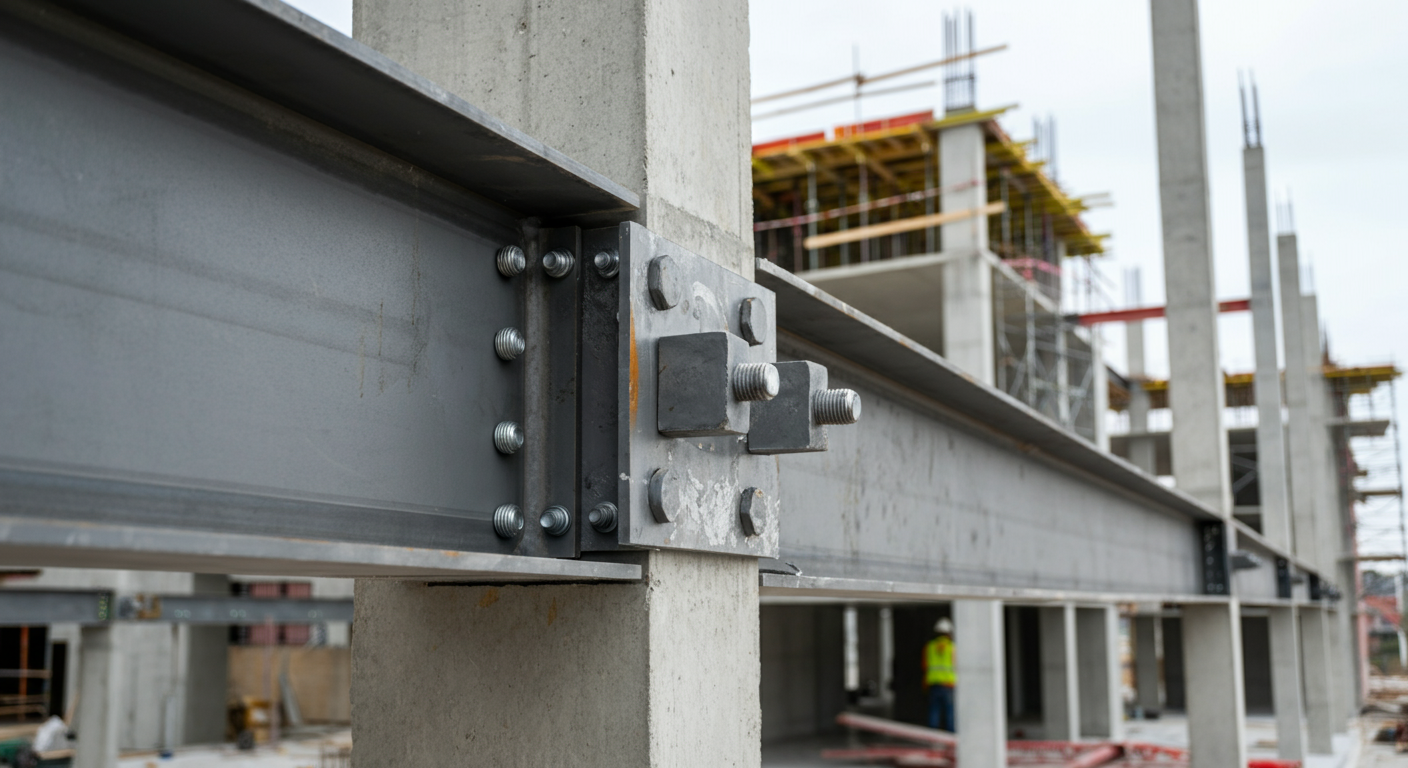
Multi-story commercial steel work isn't single-story work with more floors. The structural behavior changes, the connection design gets more involved, and the coordination demands — with the GC, the EOR, the cladding contractor, the concrete subcontractor — multiply at every level you add. A detailer who handles warehouse and industrial work well may not have the workflow or the engineering coordination experience to manage a five-story mixed-use building with moment frames, composite floor systems, and a curtainwall façade. This isn't a knock on industrial detailers — it's a scope issue. Multi-story commercial work requires sequenced erection drawings, column splice details coordinated with the erector's raise plan, floor framing that accounts for composite beam interaction, and embed coordination with trades whose work has to happen before the steel goes up. If you're bidding multi-story commercial for the first time — or qualifying a detailer for that work — here's what makes it different.
The Frame Is Doing More Work — In More Directions
In single-story industrial and warehouse construction, gravity is typically the dominant design consideration. Columns carry roof loads down, connections resist shear, and the lateral system is often a handful of braced bays that don't complicate much else. The detailing reflects that simplicity.
In multi-story commercial work, the frame is carrying gravity loads and participating in the lateral force-resisting system simultaneously — often in both directions on the same column line. Whether the EOR has specified SMFs (special moment frames), IMFs, braced frames, or a hybrid system with concrete shear walls, the connection design changes fundamentally. Moment frame connections — welded flange plates, extended end-plates, RBS (reduced beam section) configurations — require close coordination with the EOR on pre-qualified connection types under AISC 358, weld procedures under AWS D1.1, and bolting requirements under RCSC. Those connections also carry seismic demand in SDC C and D buildings, which means the detailer needs to understand how the connection fits into the overall seismic load path, not just how to produce a shop-buildable detail.
Braced frame connections at every level involve gusset plate geometry, brace-to-beam-to-column work points, and clearance checks that have to be resolved in the model before IFC — not after the fabricator's shop foreman calls with a problem.
Sequenced Erection Is Not Optional
A single-story building can often be erected in any sequence the ironworker finds convenient. Multi-story work cannot. The structural behavior during construction — temporary conditions, partially loaded frames, crane picks — is a coordination problem that starts at the detailing stage.
Sequenced erection drawings break the raise plan into phases: typically by floor level, by column line section, or by structural bay, depending on how the EOR and erector have coordinated the temporary bracing strategy. Those drawings identify the sequence in which members go up, where temporary bolt patterns need to be set before permanent welding, and which connections need to be completed before the next tier of steel can be set.
Getting this wrong costs ironworker hours and can create real safety exposure. Getting it right requires the detailer to have a working relationship with the erector before drawings are finalized — not a hand-off where the erector gets a drawing package and figures it out in the field.
Column Splices: More Engineering Coordination Than Most Fabricators Expect
In single-story work, column splices are uncommon. In multi-story commercial buildings, they're at every floor — and each one requires decisions that the detailer can't make independently.
Column splice location, splice type (bolted or welded), bearing versus non-bearing conditions, and fit-up requirements all need to be resolved with the EOR. In moment frame columns, the splice design is part of the seismic detailing — AISC 341 prescribes minimum requirements for SMF column splices, including location restrictions relative to the mid-story and minimum strength requirements that can't be defaulted. Flange plates, complete-joint-penetration welds, partial-penetration welds — each has a different fabrication and inspection implication under AWS D1.1 and the project ITP.
Beyond the engineering coordination, multi-tier column erection creates practical logistics: shipping splits, handling lengths, and sequence of field bolting. The detailer has to model all of this in Tekla, produce splice details that the shop can execute and the inspector can verify, and coordinate column mark numbers across tiers so the erection drawings are unambiguous on the site.
Floor Framing: Where Detailing Responsibility Gets Complicated
Multi-story commercial buildings almost always involve composite floor systems — steel beams with headed shear studs, metal deck, and a concrete topping slab poured by the concrete sub after the deck is down. The steel detailer's scope typically includes the steel beams, the shear stud layout, and the metal deck layout per the SDI and the structural drawings. It does not include the concrete design. But the interaction between composite beam design (governed by AISC 360 Chapter I) and deck selection, flute direction, and stud placement means the detailer has to understand how all three relate — even when the concrete sub is managing the pour.
SJI-specified joists in the floor system add another layer. Joist seat depths, bridging requirements, and bottom chord extensions for ceiling attachment all have to be coordinated with the joist supplier's shop drawings. The steel detailer's model needs to reflect the actual joist geometry — not an approximate placeholder — before the metal deck layout can be finalized.
Where beams frame into moment frame columns, composite action and connection geometry can conflict. Working through those intersections in the Tekla model before IFC submission is exactly the kind of problem that gets expensive if it surfaces during fabrication.
Façade and Embed Coordination: The Work Nobody Talks About Until It's a Problem
Curtainwall systems, precast cladding panels, brick veneer — whatever the exterior cladding system is on a multi-story commercial building, it attaches to the steel frame or to embeds that have to be set before the structure goes up. The steel detailer sits in the middle of that coordination.
Cladding connection angles, weld plates, and embed plates are often shown on the architectural drawings with a note to "coordinate with structural." In practice, that means the steel detailer has to model the attachment points in Tekla, confirm locations with the EOR and the cladding contractor, and produce details the fabricator can weld and mark before steel ships. Miss an embed location and someone is field-drilling into a column flange or hanging a connection off an awkward clip that wasn't designed for it.
Curtainwall systems add deadline pressure: many curtainwall contractors require embed locations confirmed well ahead of steel fabrication so they can order their system components. That coordination has to happen in the detailing phase, which means the detailer needs to be actively tracking the curtainwall submittals — not waiting for someone to bring it up.
Drawing Volume and Revision Management at Scale
A 10,000 SF single-story industrial building might produce 40–60 detail drawings. A five-story mixed-use commercial building with moment frames, composite floors, and cladding embeds can produce 300–500. Managing that volume through design revisions — and commercial buildings typically go through multiple rounds of EOR bulletins before IFC — requires a detailing workflow built around revision control, not just production speed.
Each bulletin has to be tracked, evaluated for scope impact, applied to the model, and reflected in the drawing set with clouded revisions and revision history blocks. A detailer without a clear revision management process will lose track of which drawing revision reflects which bulletin, and the fabricator ends up building from a mixed set.
What to Look For When You're Bidding Multi-Story Commercial for the First Time
If you're a fabricator quoting your first multi-story commercial scope — or your first with moment frames or a composite floor system — the detailer you bring in matters more than it does on straightforward industrial work. A few things worth evaluating:
Ask whether they've detailed SMF or IMF connections before, and whether they understand the AISC 358 pre-qualified connection catalog. Ask how they handle erection sequencing and whether they coordinate with the erector directly. Ask what their revision management process looks like and how they track EOR bulletins through to the drawing set. Ask whether they've coordinated curtainwall embeds and cladding connections in Tekla.
The answers tell you quickly whether someone has actually done this work or is planning to learn on your project.
NRSteel works exclusively with steel fabricators on commercial and institutional structural projects across the Southeast and nationally. If you're evaluating detailing partners for a multi-story commercial scope — first time or fifth — get in touch for a scope review. Same timezone, direct access, no handoff chain.