




Church and School Steel Construction: Why Institutional Projects Are Different
Church and School Steel Construction: Why Institutional Projects Are Different
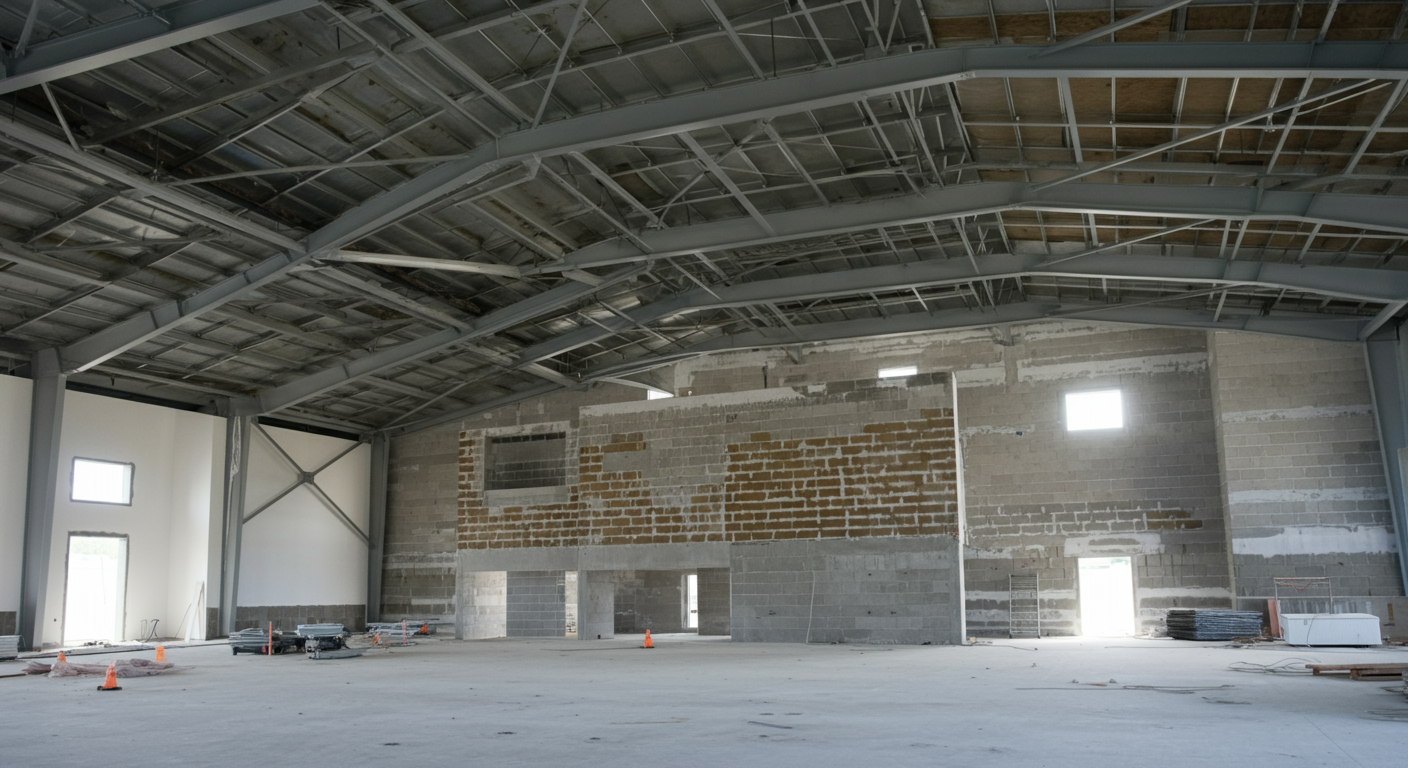
Church and school steel projects look like standard commercial work on a bid sheet. The framing is structural steel, the member sizes are familiar, the connection types are ones you've detailed before. But institutional projects carry a different set of operational demands, and fabricators who've been burned on them know that the complexity isn't usually in the steel. It's in the process. Owner-reps who review every submittal. AHJs who scrutinize the drawings on projects the community is watching. Summer construction windows on K-12 work that compress the entire schedule into three months. Long-span roof systems on sanctuaries and gymnasiums that require more connection design care than a standard bay. A detailer who can turn around a warehouse project efficiently isn't necessarily equipped to manage the documentation discipline, the review cycles, and the schedule accountability that institutional work demands. This post covers what actually changes — and what to look for in a detailing partner before you bid institutional work.
Institutional Projects Are Not Just Commercial Projects With Different Owners
The structural scope on a K-12 gym or a sanctuary isn't dramatically different from a distribution center in terms of raw steel tonnage. But the project environment is entirely different. Institutional owners — school districts, universities, religious organizations, municipal authorities — operate under public scrutiny or board governance that makes every decision visible. Owner-reps are standard on these jobs, not exceptions. Budget committees review change orders. Community members attend school board meetings where the building project is on the agenda.
That visibility flows downstream to the fabricator. Submittals get more thorough reviews. RFI responses are documented with more care. Change orders face more resistance. When the detailing package is incomplete or inconsistent, the fabricator doesn't just absorb an RFI — they absorb it in front of a project team that's already under pressure to deliver on time and on budget for a public audience.
Owner-Rep Involvement Changes the Submittal Dynamic
On a standard commercial project, submittals often go to the EOR and come back with a stamp. On institutional work, an owner's representative — sometimes an independent construction manager, sometimes a district facilities director with 30 years of experience — sits in on coordination meetings and reviews the package before it goes to the AHJ. Fabricators who aren't used to this cadence get surprised when their submittal package generates 40 comments instead of 10.
The documentation discipline has to be tighter. Sheet organization, revision clouds, field bolt callouts, weld symbols — everything gets read carefully. A detailer who produces clean, well-organized IFC packages with accurate BOM coordination and proper revision control reduces friction at every review stage.
Long-Span Roof Systems: Where the Detailing Gets Technical
Churches and school gymnasiums are the two most common institutional building types that push structural steel into long-span territory. A sanctuary with a 100-foot clear-span roof, exposed ridge beam, and sloped geometry is a fundamentally different detailing challenge from a 40-foot bay office building.
Long-span open-web steel joists under SJI specifications require close coordination with the joist manufacturer. Bridging layout, top and bottom chord extensions, joist girder seat depths, camber, and bearing conditions at the columns all have to be detailed accurately for the joist shop to price and fabricate without surprises. When a church has a curved or pitched roof plane, the geometry gets more involved — purlin spacing, hip and valley framing, variable seat elevations — and model accuracy in Tekla becomes critical.
Connection Design on Long-Span Members
A W24 or W30 joist girder seat connection carries significantly more load than anything in a typical light commercial project. Bearing stiffeners, connection plate sizing, weld requirements under AWS D1.1, and anchor rod patterns at the column base all need to be detailed with more care. If the EOR has delegated connection design to the fabricator, that work has to be done correctly — not just checked against a table. Seismic design category can add another layer: SDC C or D requirements on a K-12 in a moderate seismic zone affect connection detailing in ways that aren't always obvious to detailers who haven't worked in those SDCs before.
AHJ Scrutiny and Special Inspection Requirements
Institutional occupancy classifications under IBC — Group E for educational, Group A for assembly — trigger more rigorous plan review in most jurisdictions. AHJs who know they're looking at a school or a church that the community cares about don't rubber-stamp drawings. They read them.
Special inspection requirements for structural steel — bolted connections, welded connections, high-strength bolts per RCSC, column base grouting — need to be reflected clearly in the detailing package. The special inspection agency is working from your drawings. If weld sizes are ambiguous or bolt patterns aren't fully called out, the inspector has to stop work and generate an RFI in the field, which stalls erection on a schedule that may already have no float.
North Carolina and most Southeast states follow IBC fairly closely, but local AHJ interpretation and enforcement culture varies by county. A detailer who has worked in the region understands which jurisdictions run aggressive plan reviews and can front-load the package accordingly.
Phased Construction and Occupied-Site Coordination
K-12 school construction is where schedule pressure gets extreme. Most school districts operate under occupied-site conditions for the majority of the school year, which means structural steel erection happens during a summer window — often June through August — with hard deadlines tied to the first day of school. Eighty days to erect and close in a building is not unusual. There is no float.
That schedule pressure means the IFC package has to be complete and accurate before the erection crew shows up. A single revision cycle that burns two weeks because of a connection coordination issue or a column base anchor bolt discrepancy can put the fabricator in breach of their contract. Phased erection sequences — where one wing goes up while another is still occupied — add sequencing complexity that has to be reflected in how the model is organized and how the package is released.
Communication Cadence Matters on Compressed Schedules
When a field issue surfaces at 7 AM on a Tuesday in July with a school opening in six weeks, the fabricator needs a detailer who answers the phone. Not a ticket submitted to an overseas queue. Not a response that comes back 16 hours later. The ability to get on a call, pull up the model, and resolve a connection question in real time is not a soft benefit — it's a hard schedule requirement on institutional work.
Exposed Structural Steel: When Finish Quality Becomes a Deliverable
Sanctuaries and institutional lobbies frequently feature exposed structural steel as an architectural element. A sanctuary with exposed W-shapes at the ridge, painted wide-flange purlins, and visible HSS bracing members is a different detailing challenge than structure that gets covered by MEP and ceiling systems. Weld quality matters. Connection plate aesthetics matter. Cope geometry on beam-to-beam connections that will be visible from the pew level gets scrutinized by the architect in ways that don't apply to hidden framing.
Detailing for exposed steel means coordinating with the architect on connection appearance, flagging welds that will read poorly if done with standard procedures, and ensuring that the model reflects what will actually be visible. It also means the fabricator's shop team is working from drawings that are specific enough to get the finish right the first time.
The Documentation Discipline Institutional Owners Require
Public funding — school bond programs, municipal capital budgets, diocese construction funds — comes with paper trails. Submittal logs, RFI logs, change order documentation, revision histories. Institutional owners and their construction managers track these with more rigor than private commercial clients because they're accountable to boards and taxpayers.
A detailing partner who maintains clean revision control, issues packages with complete revision clouds, and responds to RFIs with documented written responses fits into that system. One who operates informally — verbal changes, undated sketches, informal email markups — creates documentation gaps that become problems during close-out audits or, worse, during litigation.
Why Same-Timezone, Single-POC Detailing Matters More on Institutional Work
Every project variable described above — compressed schedules, multi-party review, AHJ scrutiny, exposed steel coordination — gets harder to manage when your detailer is in a different timezone and you're communicating through a project manager relay chain. Institutional work surfaces field issues in real time. Questions come up during owner-rep meetings. The architect calls with an aesthetic concern about a connection that's visible in the sanctuary. The special inspector flags something at 8 AM.
A detailer who is reachable directly, in the same timezone, with working knowledge of Southeast code adoption and regional AHJ practices is a structural advantage on this project type. NRSteel is based in North Carolina, works exclusively with fabricators on commercial and institutional structural projects, and handles institutional work — K-12, higher ed, religious facilities, community centers — as a core part of the practice. Same-day responses, direct cell access, and the ability to attend coordination meetings in person when the schedule demands it.
If you're evaluating detailing partners for an upcoming institutional project — a school, a sanctuary, a university building — get in touch with NRSteel for a scope review. We'll tell you directly whether the project fits our wheelhouse and what the detailing timeline looks like.