




Automated Fabrication and the Future of the Steel Shop
Automated Fabrication and the Future of the Steel Shop
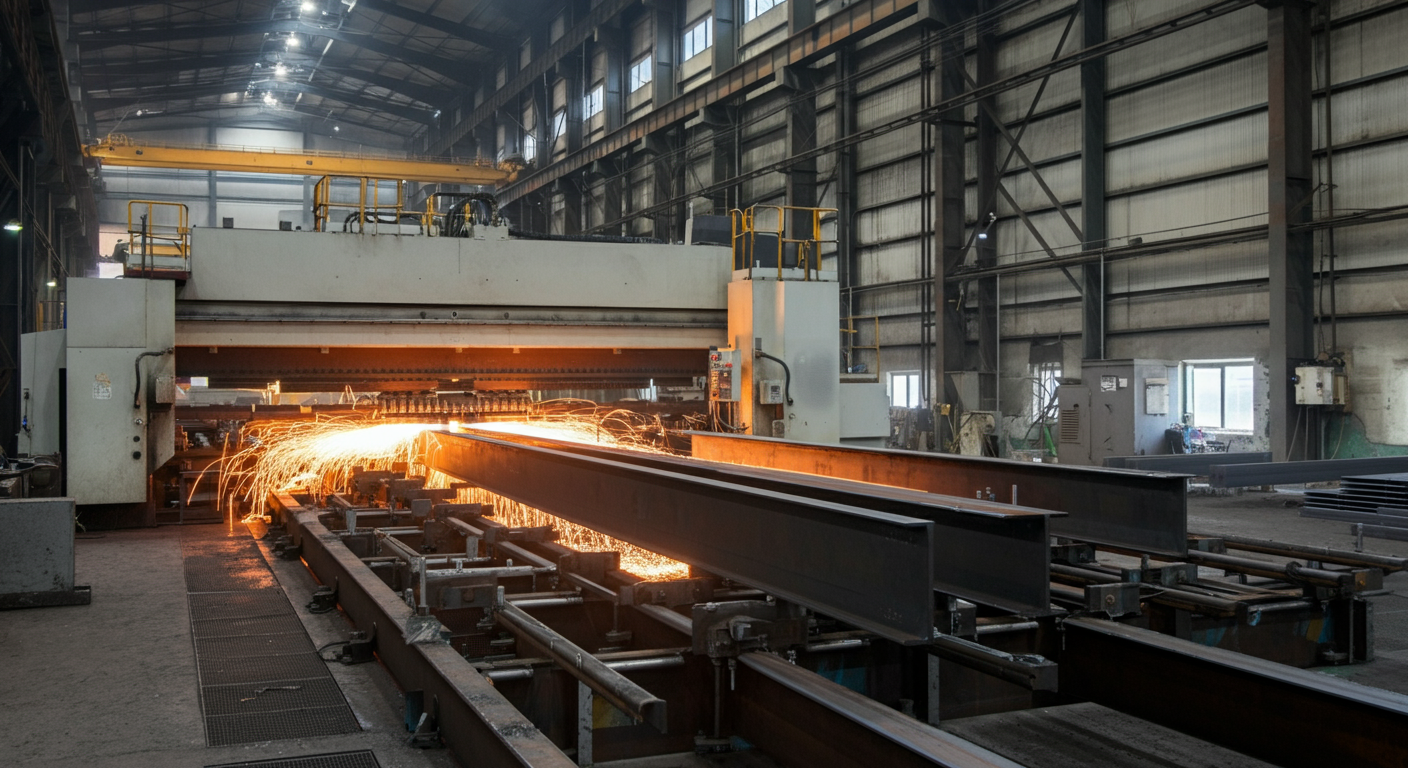
The steel fab shop of 2026 looks different from the shop of 2015, and it's going to look different again by 2030. Automated beam lines have been standard in progressive shops for years. Robotic welding is moving from automotive transfer to structural steel. Automated material handling systems are linking the model to the yard in ways that weren't practical a decade ago. All of that is real, and all of it is moving faster than the detailing industry has fully absorbed. The core problem: fabrication automation is only as good as the data it runs on, and that data comes from the detailing model. A robotic welder needs weld data that a human welder would figure out from a drawing. An automated material handling system needs piece marking data that a yard crew would read off a tag. When that data is wrong or missing, the automation doesn't compensate — it fails, often expensively. This post is a working overview of where fab shop automation is, what it requires from detailing, and what fabricators need to be talking to their detailer about as they invest in new equipment.
Where Fabrication Automation Actually Is Right Now
Beam lines — CNC-controlled systems that drill, saw, cope, and mark structural members — are not new. Shops running Peddinghaus, Ficep, or Voortman equipment have been producing beam line output from DSTV files for well over a decade. What's changed is the integration layer. Modern beam lines aren't standalone machines; they're networked to ERP systems, nest optimization software, and increasingly to the fabrication model itself. The file format still traces back to DSTV/NC1, but what feeds that file, and what the file triggers downstream, has gotten considerably more complex.
Robotic welding is the more recent frontier. Structural applications lag automotive by years — the geometry is less repetitive, the weld sizes are larger, fit-up tolerances matter more, and the range of connection types is orders of magnitude wider than an assembly line bracket. But shops are investing. Robotic systems from Lincoln Electric, Miller, and others are being deployed on fillet welds for repetitive assemblies: base plates, beam-to-column clips, stiffener plates. The economics work when the geometry is consistent and the volume is there. The constraint is always the same: the robot needs precise weld data. It doesn't interpret intent.
Automated material handling — conveyor systems, overhead cranes with automated positioning, barcode and RFID-driven inventory tracking — is moving the yard from a manual-lookup environment to one where a scanner or sensor tells the system where every piece is, what work it needs, and what sequence it's needed in for erection. This is where piece marking data becomes load-bearing infrastructure rather than a convenience.
The Model-to-Machine Gap
Every layer of automated steel fabrication has the same vulnerability: a gap between what the detailing model contains and what the machine needs to execute. In a conventional shop, that gap is bridged by experienced ironworkers and shop foremen who read drawings, ask questions, and make judgment calls. They compensate for incomplete weld callouts, ambiguous fit-up conditions, and missing piece mark sequences. They're good at it. Automation is not.
When a beam line pulls a DSTV file, it executes exactly what the file contains. If a cope is missing because the detailer didn't run the correct fitting routine in Tekla, the beam line doesn't add it — it produces a part that won't fit in the field. When a robotic welding cell receives weld data, it runs the passes it's told to run at the size it's told. If the data says a 3/16 fillet where the connection design requires 5/16, the robot makes the wrong weld at high speed and volume.
This is the model-to-machine gap, and closing it is the central challenge for any shop investing in automated steel fabrication technology.
What Automated Fabrication Requires from the Detailing Model
Conventional shops can work from drawings that carry most of the information and leave some to field judgment. Automated shops cannot. The model has to be complete in ways that weren't previously necessary.
Weld data needs to be explicit: size, type, length, position, and access condition. A detailer working for a manual shop can note a standard AWS D1.1 fillet weld and trust the welder to execute it correctly given the joint geometry. A robotic welding cell needs the weld path, the torch angle constraints, and confirmation that the geometry is accessible. That means the detailer has to think about weld access in 3D, not just call out the weld on a 2D view.
Fitting and coping must be fully resolved in the model before DSTV export. Every cope, block, rat hole, and cope radius needs to be modeled to final geometry. Tekla Structures handles this well when the detailer runs proper fittings and validates them — but it requires discipline that a manual-shop workflow doesn't enforce because the shop floor catches errors that the model doesn't.
Piece marking logic must be consistent and export-ready. Piece marks drive the automated yard. If the marking convention doesn't match what the material handling system expects — if sub-marks are generated incorrectly, if main marks duplicate, if the erection sequence isn't embedded in the mark structure — the yard system is sorting bad data.
Assembly sequences need to be reflected in the model for advanced shops running sequenced erection tracking. What gets shipped in what truck, in what order, tied to which erection zone — that's model data, and it has to be right.
Robotic Welding and Weld Data: The Detailer's Role
The most direct implication of robotic welding for detailers is this: the implicit weld knowledge that lives in AWS D1.1 tables and welder judgment has to move into the model. A shop running robotic welding on base plate assemblies needs every fillet weld sized explicitly. Standard prequalified joints under AWS D1.1 still apply, but the detailer has to confirm the joint geometry meets prequalification requirements and call it out clearly — not rely on the welder to make that judgment at the machine.
For seismic applications in higher SDC categories, where demand-critical welds require specific filler metals, preheat, and inspection protocols under AWS D1.8, the weld data requirements become more complex. A robotic cell executing CJP welds on moment connections needs parameters that go beyond what a standard weld callout conveys. Shops doing this work are typically running engineer-authored welding procedure specifications (WPS) integrated with the machine program — but the detailing model still has to correctly identify which welds are demand-critical and what joint geometry they're executing.
Automated Material Handling and Piece Marking
The yard of a digital fab shop is not a field of tagged steel being sorted by eye. It's an inventory system where location, status, and sequence are tracked in real time. Every piece that comes off the beam line gets scanned. Every assembly that comes out of fit-up and welding gets logged. The system knows what's ready to ship, what's waiting for inspection, and what sequence the erection crew needs for the next day's pick.
That system runs on piece mark data from the detailing model. If the model produces incorrect marks, duplicate marks, or marks that don't align with the shop's ERP conventions, the yard system is wrong from the first scan. Reconciling that manually — which someone has to do — is exactly the kind of labor cost that the automated material handling system was supposed to eliminate.
Detailers working with advanced shops need to understand the shop's piece marking conventions before the model is built, not after. That conversation should happen at kickoff, not at IFC submittal.
What Fabricators Should Tell Their Detailer When They Add New Equipment
Most fabricators don't have this conversation, and it costs them. A shop buys a new robotic welding cell or upgrades to an integrated material handling system and continues working with their detailing partner using the same scope-of-work assumptions that were set up when the shop was running manual operations. The detailer produces what they've always produced. The shop's new equipment gets fed the same data it's always been fed. The automation underperforms because the data isn't built for it.
The conversation that needs to happen: What file formats does the new equipment consume, and from what part of the model? What weld data does it require explicitly versus what it can derive? How does piece marking need to be structured for the yard system? Are there assembly sequence requirements that need to be reflected in the model?
A detailing partner who understands automated steel fabrication can adjust their workflow to meet those requirements. One who doesn't know the requirements exist can't compensate.
Where This Is Heading
Lights-out fabrication — a shop that runs through the night with minimal human oversight, driven entirely by model data and machine instructions — is not speculative. It exists in European structural steel manufacturing at scale and is moving into North American shops as the economics improve and the skilled labor shortage deepens.
AI-driven cut optimization is already deployed in nesting software, reducing material waste by finding cut sequences that beam lines and plate processors can execute efficiently. Closed-loop quality checking — vision systems and laser scanning that verify fabricated geometry against the model in real time and flag deviations before the piece leaves the machine — is in active deployment in progressive shops.
All of it runs on detailing data. The quality ceiling for automated fabrication is set by the quality of the detailing model, and that relationship gets tighter, not looser, as the technology advances.
Working with a Detailer Who Understands Where This Is Going
If your shop is evaluating capital investments in automation — or already running automated equipment and not getting the throughput you expected — the detailing interface is worth examining before the next equipment decision. A detailer who understands the model-to-machine requirements for automated steel fabrication is a different resource than one who produces IFC-compliant shop drawings and stops there.
NRSteel works exclusively with steel fabricators on commercial and institutional structural projects. If you're investing in automation and want a detailing partner who knows what that requires from the model, get in touch to discuss your next job.